
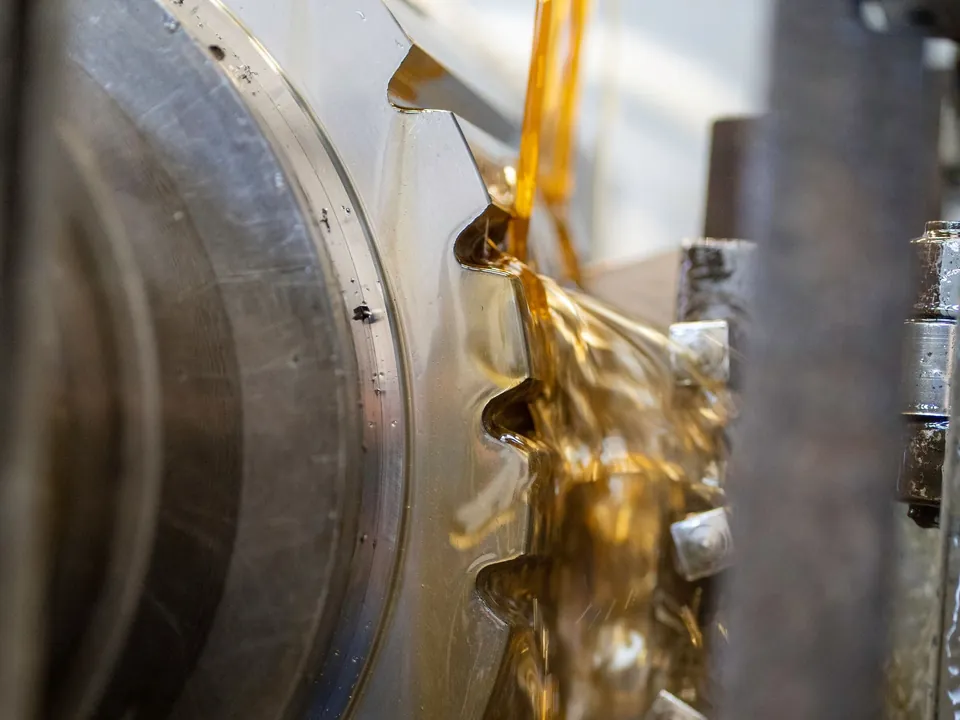
Separates
Keeps a film between moving metal parts, so they slide on oil instead of on each other.
Refrigeration, compressor, gear, engine and insulating oils for your plant — chosen by oil type, grade and the maker's specification.
Gap drawn far larger than real: in a running bearing the thinnest film is only a few thousandths of a millimetre.
Keeps a film between moving metal parts, so they slide on oil instead of on each other.
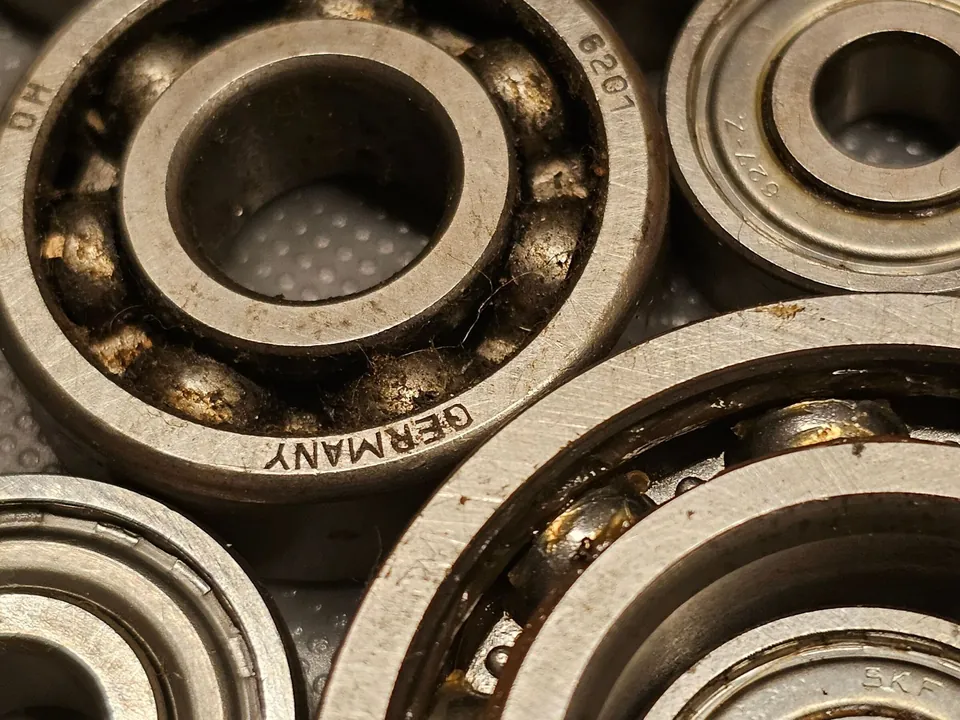
Carries heat away from bearings, gears and — in a screw compressor — from the air being compressed.
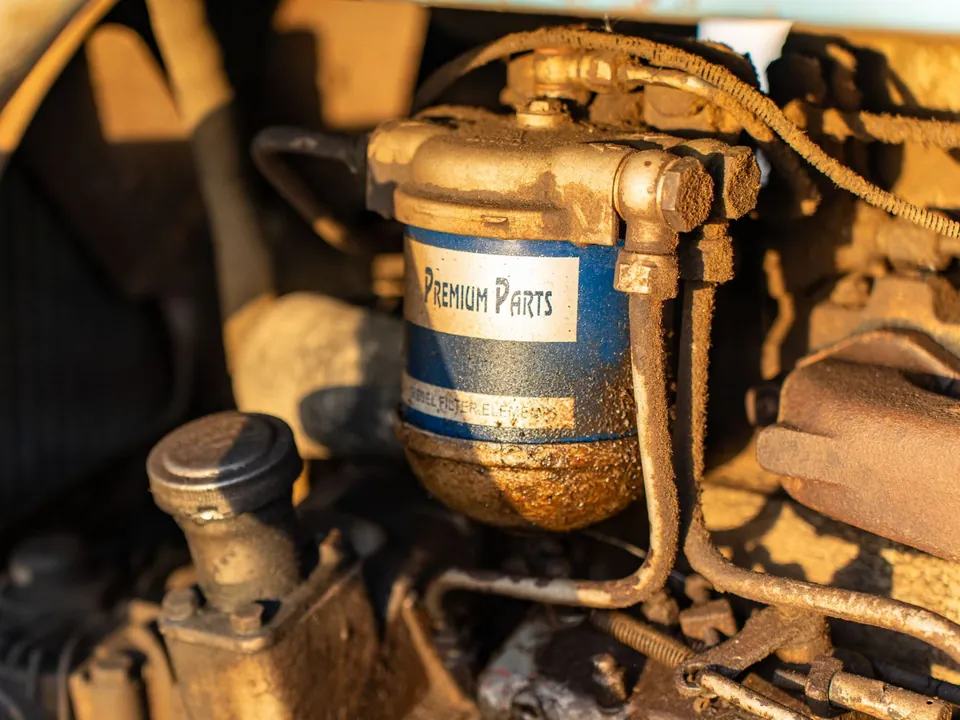
Picks up wear particles and dirt and carries them to the filter instead of leaving them in the contact.
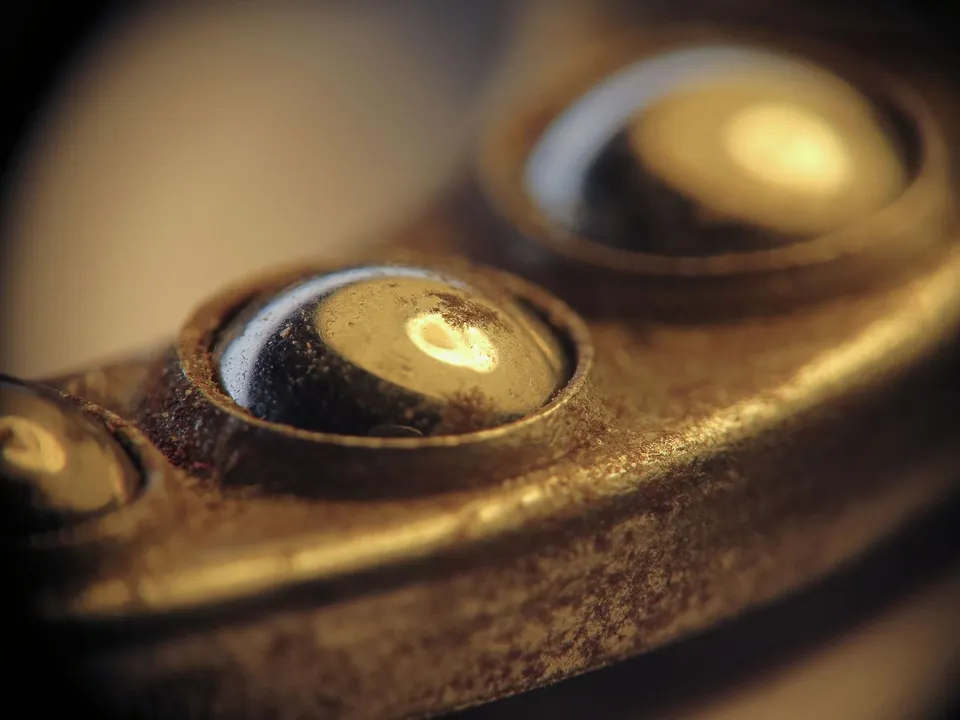
Closes the tiny gaps between compressor rotors and coats steel against rust and acid.
Pick a machine from your plant. The grade shown is the usual range — the nameplate and the maker's manual always have the final word.
Tap a machine to see its oil
Refrigerant in the machine
HFC and HFO refrigerants do not mix well with mineral oil; POE lets the oil travel back to the compressor.
Watch for
When to sample or change
Have the oil tested for acid and moisture at service visits. Change it on the result, after a burnout, or at the maker's interval.
Refrigerant in the machine
The usual oil for HFC and HFO cold rooms and blast freezers. Same moisture care as chillers.
Watch for
When to sample or change
Have the oil tested when it darkens, when the compressor runs hot, and after any burnout.
Watch for
When to sample or change
By the hour meter: mineral oil commonly up to about 4,000 h or one year, long-life synthetics up to about 8,000 h — the maker's interval and the running temperature decide.
Watch for
When to sample or change
Turbine-type mineral oil: about every six months. The maker's synthetic gear oil lasts much longer — follow the reducer manual.
Watch for
When to sample or change
At the hours in the engine manual, or once a year if those hours are not reached.
Watch for
When to sample or change
Re-grease by the quantity and interval on the motor or pump plate; check oil-bath bearings by level and colour.
Watch for
When to sample or change
Test breakdown voltage and moisture on a schedule; filter or replace the oil on the result.
The number is the oil's thickness at 40 °C in mm²/s (cSt), with ±10 % allowed (ISO 3448). Each grade is about one and a half times the one before. The right one forms a film without wasting power.
ISO VG 100
90–110 mm²/s at 40 °C
Piston air compressors, pump oil-bath bearings
Viscosity is the first line on any oil report. Move the slider to see how a change from new oil is usually read.
Normal
Close to new oil — keep sampling on schedule.
A common rule of thumb in oil analysis; some machine makers allow more. The maker's limits come first.
In refrigeration oil it feeds acid; in gear and bearing oil it rusts teeth and races.
Rises as the oil oxidises or reacts with moisture. A steady climb means the oil is near the end of its life.
Iron points to gears, shafts and bearings. Copper alone often comes from a cooler; copper with tin, from a bronze part.
Reported as an ISO 4406 code — the number of particles above 4, 6 and 14 µm. Dirt in the oil is wear waiting to happen.
Top up with exactly what is in it. Label every can and pump with the oil it is used for.
Close containers right after use. POE and PAG oils take up moisture from humid air once opened.
Lay them on their side with the bungs at 3 and 9 o'clock, so rainwater cannot sit on the bungs and be drawn in.
Use clean, dedicated pumps and containers. A dirty funnel can undo a new oil charge.
Date, hours, oil and quantity on the machine log — it makes the next oil report readable.
Collect it in closed drums for a licensed collector — never into drains or soil.
Photo of the machine plate, the refrigerant and running hours — on WhatsApp is fine.
Oil family, grade and specification checked against the maker's requirement.
Sealed packs to your site, with the oil change done by our service team if you want it.
Only when the oil family and the specification are the same — for example POE to POE of the same ISO grade. Mixing families (POE with mineral oil, PAG with anything else) is where most oil problems start. When in doubt, send us the nameplate and the label of the oil already in the machine.
No. A grade that is too heavy wastes power, runs hotter and reaches the bearings late on start-up; one that is too light cannot hold the film under load. Use the grade on the plate unless the maker recommends a change.
It is the oil's kinematic viscosity at 40 °C: VG 68 oil measures between 61.2 and 74.8 mm²/s (cSt). Each ISO 3448 grade is about one and a half times the one before.
No. SAE grades such as 15W-40 are a separate system for engine oils. Only rough equivalents exist, so never swap one for the other.
A clear photo of the machine nameplate, the refrigerant (for chillers and cold rooms), the running hours and, if you have it, the oil label. That is usually enough to match the oil type and grade to the maker's specification.
Send a photo of the nameplate. We will tell you the oil type and grade the maker asks for.